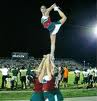
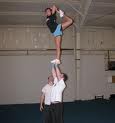
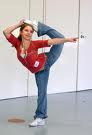
Then we have other things like heel stretches, bow'n'arrow, scale, aero AKA arabesque. 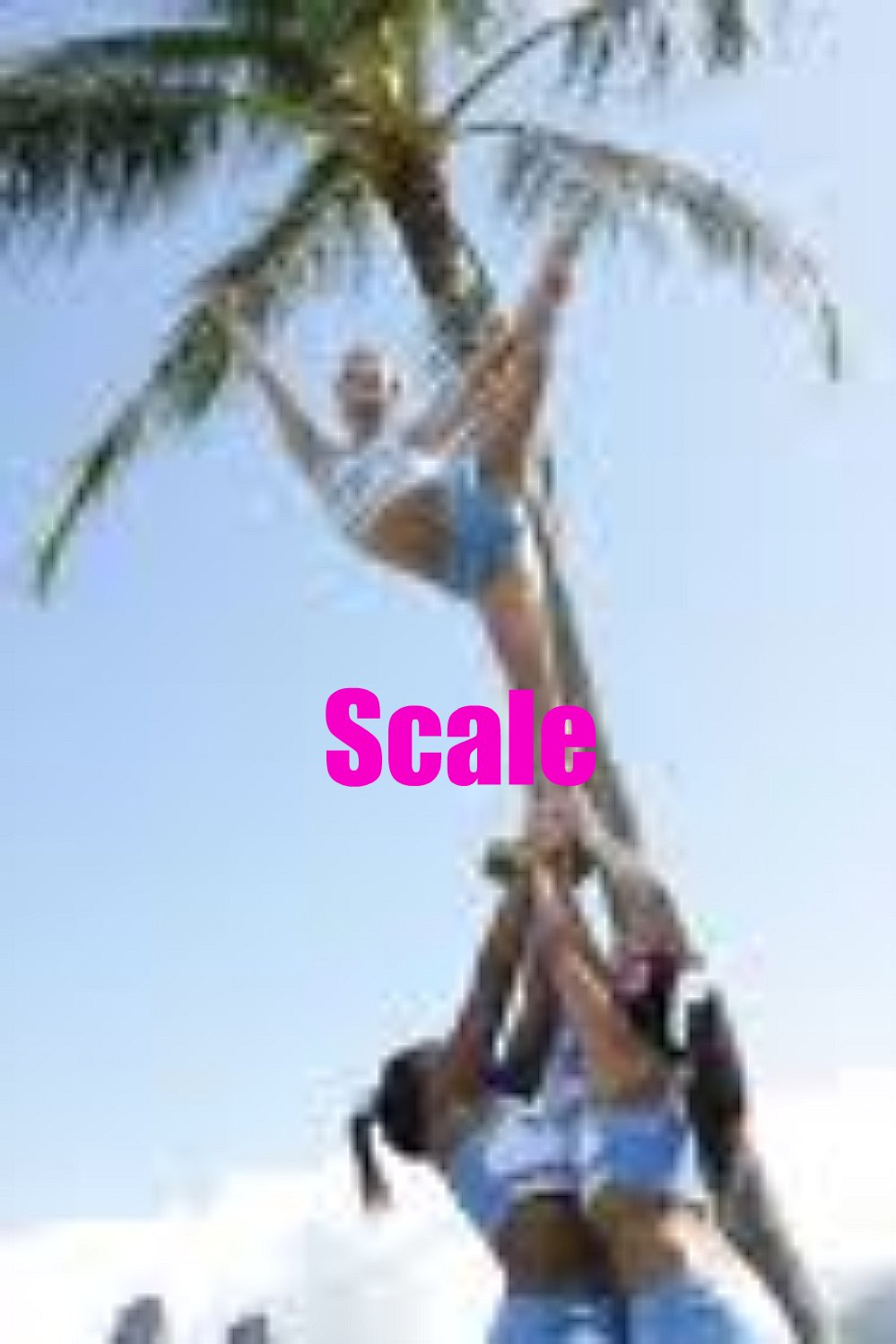 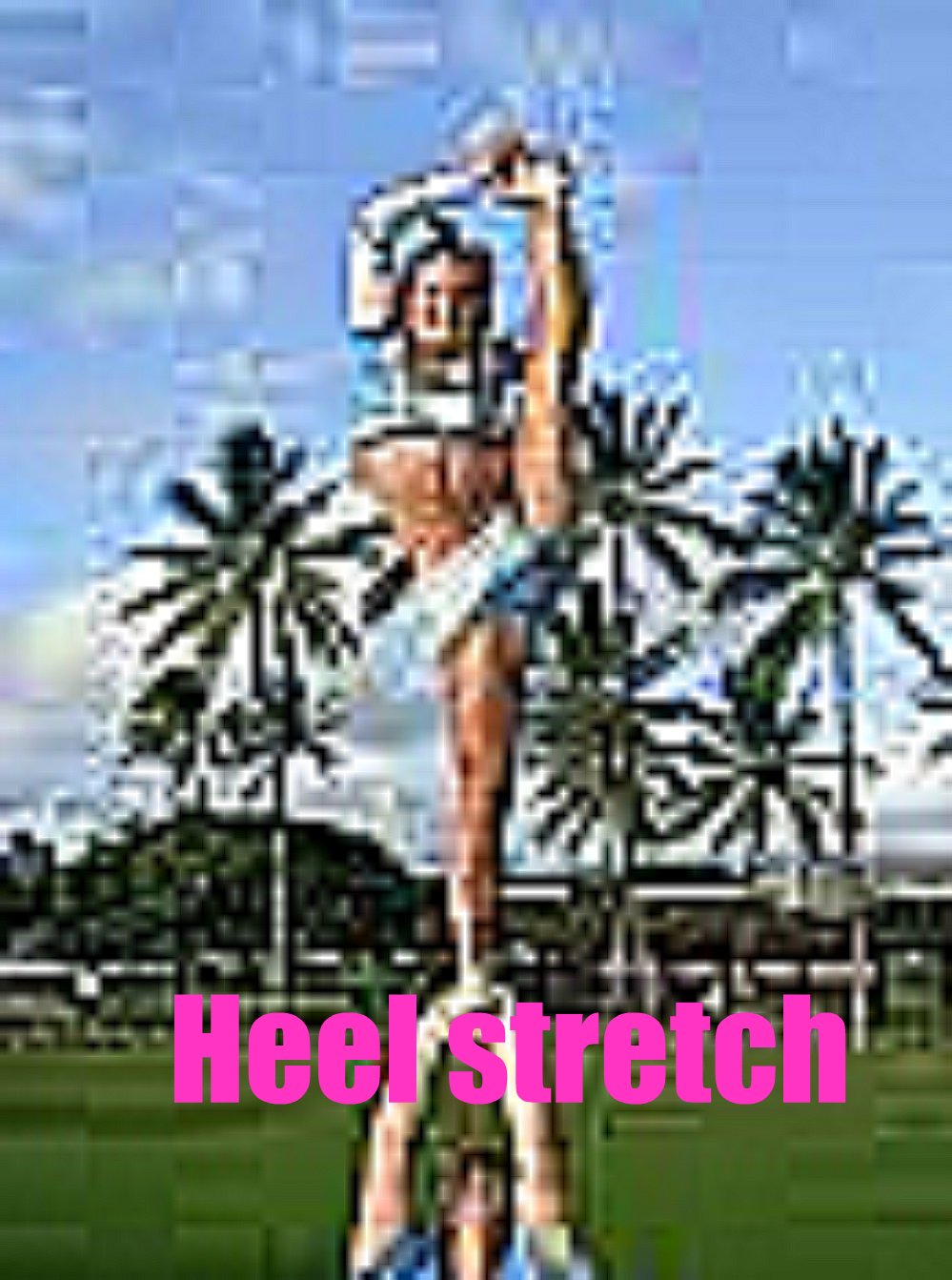 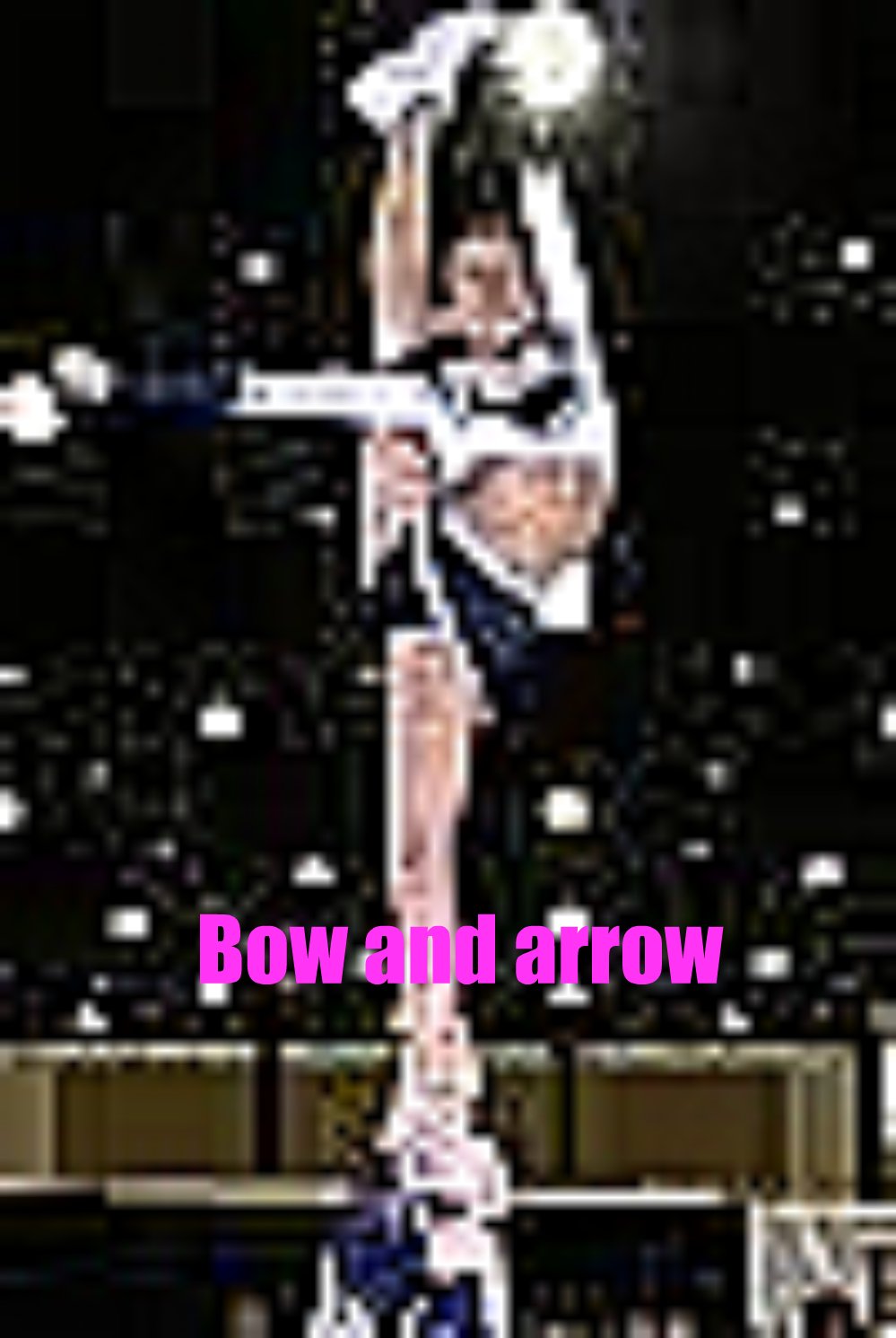    
Stunts are defined as building performances displaying a person's skill or dexterity. Stunting in cheerleading has been previously referred to as building pyramids. Stunts range from basic two-legged stunts to one-legged extended stunts and high flying basket tosses. There are numerous variations of each basic stunt.
A stunt group usually involves up to four bases holding or tossing another cheerleader in the air. In general, all-girl cheerleading stunts usually involve up to four other bases while co-ed ("partner") stunts have only one base (usually male) and his partner (the flyer, usually female). Pyramids are multiple groups of stunts connected aerially by the flyers. This connection may be made in a variety of ways, from a simple linking of hands to having a multi-level pyramid, with the flyers already in the air acting as primary bases for another flyer or flyers on top of them
-
Bases
-
-
Cheerleaders that stay on the ground providing the primary support for the flyer during a stunt. Bases should be watching the flyer at all times in the case of a mishap. Also, bases should keep eye contact with each other at all times, so they have an understanding on what to do next. Bases can be male or female, but they are usually the strongest athletes on the squad. The bases are usually two females or one male. No talking should be happening during a stunt, except for the backspot's counts.
-
-
Main Base
-
-
The term main base only applies when doing a one-legged stunt. This base has the majority of the flyer's foot, and the majority of her weight. The main base will be almost directly under the stunt until it is cradled or brought down. In a one leg extension stunt, the main base will lift the toe and heel of the foot to increase stability from moving forwards or backwards. With single base extensions the main base with grip onto the heel of the flyers foot having a nice and stable transition.
-
-
Side Base
-
-
The term side base only applies when doing a one-legged stunt. The side bases help lift the flyer up into the air and support an equal amount of weight as the main base. The hand position for the side base can vary depending on preference. The more common placement is to have one hand under the middle of the foot and the other hand on top of the foot for stability. Another common option is to have one hand under the middle of the foot and the other hand pushing up on the wrist of the main base to lift from underneath. The side base's hand positioning functions to lift and to stabilize the flyer's foot from shifting from side to side.
-
-
Flyer
-
-
This is the person that is in the air during a stunt. The flyer must control their own weight by keeping their abdominal muscles tight to stabilize the spinal column while in the air. If they don't stay tight, there is a greater risk of them becoming off of their center of balance and falling. They must keep a steady focus on what they are doing. A strong core and good sense of balance are key qualities for a flyer to possess. Flyers should be extremely flexible and have a slender muscular body. Flyers are typically the shortest and smallest people on the team, but other members can act as a flyer depending on their exceptionally abilities.
-
-
Back Spot (Back Base or Third in some regions)
-
-
This is the person standing behind the stunt. They help to position the flyer in the bases hands. They do so by using their hands to support the flyer's waist, and then push her up into the air. Once in the air, they will hold the flyer's ankles, providing support. When the flyer cradles, they catch her under the arms. If the flyer falls backwards, it is crucial for the back spot to attempt to catch the head and shoulders to prevent head/spinal injury. Because of the back spot's responsibilities, they are generally the tallest members of the team.
-
-
Front Spot
-
-
This is the person standing in front of the stunt facing the backspot preventing the flyer from falling forward. The front spot often provides extra support to wrists of the bases in higher stunts such as extensions. The front spot has somewhat of the job of the back spot. Though the front spot is there, a flyer should never fall forward, rather backwards. There is not always a front spot in a stunt, and many squads only use front spots for basket tosses because it helps to throw straight upwards. Front spots are typically the smaller members of the squad, who have not been trained or are not flexible enough to fly, and are also not at the right height to side or back.
to be a base or a backspot.
-
Additional (hands-off) Spotter
-
-
This person does not actually touch the stunt unless something goes wrong. The free standing spot can stand behind, in front, or beside the stunt. Eyes stay on the stunt at all times even though the stunt is not touched unless the flyer is falling. This position is sometimes called a general spot.
Basic Rules for Stunting
-
No one should talk while stunting except coach or back spotter
-
The back spotter is the most important person in all stunts. They should be aggressive, smart, and as tall as possible.
-
The back spottere calls everything while stunting. (What stunt is being performed, when to start, when to break, when to cradle, etc)
-
Every stunt should be done to counts for timing purposes.
-
Flyers should know how to fall. Bases should know how to catch.
-
Everyone should know what position they are and what their job will be during the stunt. They should realize that each position is important.
-
Flyers should not let their feet go more then shoulder width apart.
-
Bases should stand no further apart then the width of the flyer's shoulders.
-
Be sure the bases do not back up while stunting and flyer does not bottom out.
Pointers on Cradles
-
Starting from an elevator (extension prep) use counts so that everyone moves at the same time. The back spottere calls: "Ready - 1 - 2- down - up - catch - and - out".
-
The flyer can do arm movements in a number of different ways.
1. They can start in a High V and on the pop reach arms up to a touchdown in blades.
2. They can start in a High V and on the pop bring arms down to the legs in front.
In the air the body should stay straight or in a slight arch. Feet should be pointed and stay down until right before the catch.
Upon landing in the cradle, the flyer's arm should hit a T motion. This will allow the third base to scoop and hold higher.
-
The bases should dip together on the down and pop up on the up. After they catch they should stop the flyer at chest height and bend the knees to cushion the catch.
Be sure the bases do not lean forward as they catch.
They should not let the flyer's bottom go lower than their waist. The third base holds ankles of the flyer and throws from the ankle on up. As the third base throws she should reach up, hands in blades until the flyer comes down scooping the flyer into her chest. Be sure she does not hit the flyer in the face with her hands as the flyer comes down.
-
All the bases should watch the flyer at all times in case she starts to fall or lean in one direction.
-
The back spotter holds the front wrist of the bases. They can help even out a bad pop as the bases dip and throw. The fourth base catches the feet at the ankles on the cradle. She should turn and hit the out positions.
The position of base in Cheerleading is vital, for without bases the flyer wouldn't go up. The bases lift or throw the flyer and as the name implies, they are the base or foundation of a Cheerleading stunt or mount.
No one position on a squad should have more importance than another, Cheerleading is a team sport after all and it takes everyone (flyers, bases, spots) to complete a stunt to its full effect. But interestingly, in a recent poll in the About Cheerleading forum, basing was voted the most difficult position in Cheerleading, with flying coming in a close second. So, never underestimate the importance of being a base.
Although physical attributes may play a part in what position you fill (bases tend to be taller and stronger) it is your skill and ability that are important. And a well rounded Cheerleader can step in wherever she or he is needed.
Skills, Abilities and Tips on Basing
-
Trust - This can't be stressed enough. You must trust your squad members and them you.
-
Confidence - Know you can do it. Be confident and have a good attitude.
-
Use Your Legs and Arms - Lift with your legs, that is where the majority of your strength should come from. It should progress from your legs to your shoulders and then your arms.
-
Keep Your Back Straight - Bending your back or leaning will cause you to use your back to lift and may cause injuries to it.
-
Timing - Bases must be in time with each other, they have to know when to dip, when to step and when to lock. Practice this without a flyer actually going up to avoid injuries. Synchronize your moves and make sure everyone knows what to do and when to do it.
-
Foot Placement - Keep your feet shoulder-width apart to stabilize yourself and the stunt.
-
Placement of Bases - Bases should stand no further than the flyer's shoulder width apart from each other.
-
Don't talk during a stunt. Only the coach or person calling the stunt should talk.
-
Know how to catch your flyer. Although this is technically the spotters job, a good base should be capable of catching the flyer and assisting. The flyer should never fall and hit the ground.
-
Be prepared and alert at all times. Maintain good eye contact on the stunt and don't become distracted. Stay focused regardless of what is going on around you.
-
Practice good safety guidelines. Safety should be your top priority.
-
Smile and have fun.
Our next article will cover spotting, so be sure to watch for it in the next coming weeks. In the meantime, you can visit the About Cheerleading forum and tell us what your position is and why you think it's important or just read what other Cheerleaders have to say about flying, basing and spotting.
| A. |
|
1. |
A spotter is required for all stunts at shoulder level and above (exception: shoulder sits and straddle sits). (Example: suspended splits, flat-bodied positions, extension preps, etc). Clarification: The center base in an extended v-sit may be considered a spotter as long as they are in a position to protect the head and shoulders of the top person. |
|
2. |
Extended stunts are not allowed (see definition of extended stunts in glossary). A stunt may not be held at or pass through an extended position. Clarification: If it is obvious to the safety judge that the intent of the stunt group is to gain a competitive advantage by passing through an extended position, then it is a violation of this rule. Taking the top person above the head of the bases would be illegal. | |
| |
|
| B. |
Single leg stunts are only allowed below shoulder (prep) level. Clarification: If the primary bases squat, go to their knees or drop the overall height of the stunt and hold the top person at their shoulder level, this skill would be considered shoulder level and therefore illegal, regardless of the back spot's positioning. |
| |
|
| C. |
Twisting stunts and transitions are allowed up to ¼ twists by the top person. |
| |
|
| D. |
During transitions, all bases need to remain in contact with the stunt Top Person. Transitional stunts may not involve changing bases. |
| |
|
| E. |
Free flipping or assisted flipping stunts and transitions are not allowed. |
| |
|
| F. |
No stunt, pyramid, or individual may move over or under another separate stunt, pyramid or individual (example: shoulder sits walking under prep). |
| |
|
| G. |
Pendulum and pendulum style transitional stunts, where the top person falls away from the original bases, must use at least three stationary catchers, at least two of which are not original bases. Physical contact must be maintained with all of the original base(s). |
| |
|
| H. |
Single based split catches are not allowed. |
| |
|
| I. |
Single based double awesomes/cupies require a separate spotter for each top person. |
| |
|
| J. |
|
L1 Stunts - Release Moves |
| |
1. |
Release moves are not allowed other than those allowed at Level 1 in "Dismounts". |
| |
2. |
Release moves may not land in a prone position. |
| |
3. |
Release moves must return to original bases. |
| |
4. |
Helicopters are not allowed. |
| |
5. |
A single full twisting log/barrel roll is not allowed. |
| |
6. |
Release moves may not intentionally travel. |
| |
7 |
Release moves may not pass over, under or through other stunts, pyramids or individuals. | |
| |
|
| K. |
|
L1 Stunts - Inversions |
|
1. |
All inversions must maintain contact with the performance surface (Example: supported handstand). | |
| |
|
| L. |
Bases may not support any weight of a top person while that base is in a backbend or inverted position. (Clarification: a person standing on the ground is NOT considered a top person.) |
| A. |
Pyramids must follow Level 1 "Stunts" and "Dismounts" rules and are allowed up to 2 high. |
| |
|
| B. |
Top person must receive primary support from a base. |
| |
|
| C. |
Two leg extended stunts
1. Two leg extended stunts must be braced by at least two persons at prep level or below with hand/arm connection only.
2. The connection must be made at or below prep level. |
| |
|
| D. |
Single leg stunts at prep level
1. Single leg stunts at prep level must be braced by at least one person at prep level or below with hand/arm connection only.
2. The connection must be made prior to executing single leg stunt and must be made at or below prep level. |
| |
|
| E. |
No stunt, pyramid, or individual may move over or under another separate stunt, pyramid or individual. |
| A. |
Cradles from single based stunts must have a separate spotter with at least one hand/arm supporting the head and shoulder area through the cradle. |
| |
|
| B. |
Cradles from multi-based stunts must have two catchers and a separate spotter with at least one hand/arm supporting the head and shoulder area through the cradle. |
| |
|
| C. |
Dismounts to the performing surface from stunts and pyramids must be assisted by an original base. |
| |
|
| D. |
Only straight pop downs and basic straight cradles are allowed. |
| |
|
| E. |
Twisting dismounts (including 1/4 turns) are not allowed. |
| |
|
| F. |
No dismounts are allowed from extended stunts in pyramids. |
| |
|
| G. |
No free flipping or assisted flipping dismounts allowed. |
| |
|
| H. |
Tension drops/rolls of any kind are not allowed. |
| |
|
| I. |
When cradling single based double awesome/cupies, 2 catchers must catch each top person. |

| A. |
A spotter is required for all extended stunts. |
| |
|
| B. |
|
Single leg stunts may not be held at or pass through an extended position. |
|
Clarifications: |
| |
1. |
If it is obvious to the safety judge that the intent of the stunt group is to gain a competitive advantage by passing through an extended position, than it is a violation of this rule. Taking the top person above the head of the bases would be illegal. |
| |
2. |
If the primary bases squat, go to their knees or drop the overall height of the stunt while extending their arms, this skill would be considered extended and therefore illegal, regardless of the back spot's positioning. | |
| |
|
| C. |
Twisting mounts and transitions are allowed up to a total of 1/2 twist between the bases and the top person combined. Clarification: a half twist performed with an additional half turn by the bases would be illegal if performed simultaneously. |
| |
|
| D. |
During transitions, at least one base must remain in contact with the top person. |
| |
|
| E. |
Free flipping or assisted flipping stunts and transitions are not allowed. |
| |
|
| F. |
No stunt, pyramid, or individual may move over or under another separate stunt, pyramid or individual (e.g. shoulder sits walking under prep). |
| |
|
| G. |
Pendulum and pendulum style transitional stunts, where the top person falls away from the original bases, must use at least three stationary catchers, at least two of which are not original bases. Physical contact must be maintained with all of the original base(s). |
| |
|
| H. |
Single based split catches are not allowed. |
| |
|
| I. |
Single based double awesomes/cupies require a separate spotter for each top person. |
| |
|
| J. |
A single full twisting log/barrel roll is allowed as long as it starts and ends in a cradle possition Clarification: Log/Barrel roll may not include any skill other than the twist (ex: no kick full twists) Clarification: The log roll may not be assisted by another top person. |
| |
|
| K. |
|
L2 Stunts - Release Moves |
| |
1. |
No release moves allowed other than those allowed at Level 2 in "Dismounts" and "Tosses." |
| |
2. |
Release moves may not land in a prone position. |
| |
3. |
Release moves must return to original bases. |
| |
4. |
Helicopters are not allowed. |
| |
5. |
A single full twisting log/barrel roll is allowed as long as it starts and ends in a cradle position.Clarification: Log/Barrel roll may not include any skill other than the twist (ex: no kick full twists) Clarification: The log roll may not be assisted by another top person. |
| |
6. |
Release moves may not intentionally travel. |
| |
7. |
Release moves may not pass over, under or through other stunts, pyramids or individuals. | |
| |
|
| L. |
|
L2 Stunts - Inversions |
| |
1. |
All inversions must maintain contact with the performance surface.
Exception: Transitions from ground level inversions to non-inverted positions are allowed.
Clarifications:
Legal: Going from a handstand on the ground to a non-inverted stunt such as a shoulder sit.
Illegal: Going from a cradle to a handstand or from a prone position to a forward roll. | |
| |
|
| M. |
Bases may not support any weight of a top person while that base is in a backbend or inverted position. (Clarification: a person standing on the ground is NOT considered a top person.) |
| A. |
Pyramids must follow Level 2 "Stunts" and "Dismounts" rules and are allowed up to 2 high. |
| |
|
| B. |
Top persons must receive primary support from a base. Clarification: Anytime a top person is released by the bases during a pyramid transition, the top person must land in a cradle or dismount to the performing surface. |
| |
|
| C. |
Extended single leg stunts may not brace or be braced by any other extended stunts. |
| |
|
| D. |
No stunt, pyramid, or individual may move over or under another separate stunt, pyramid or individual (e.g. shoulder sits walking under prep). |
| |
|
| E. |
|
Extended single-leg stunts |
| |
1. |
must be braced by at least one person at prep level or below with hand/arm connection only. |
| |
2. |
The connection must be made prior to executing single leg stunt and must be made at or below prep level. |
| |
3. |
Prep level top persons (bracers) must have both feet in bases’ hands. (Exception: prep level top persons do not have to have both feet in the bases’ hands if they are in a shoulder sit, double base thigh stand, flat back, straddle lift or shoulder stand) | |
| A. |
Cradles from single based stunts at prep level and above must have a separate spotter with at least one hand/arm supporting the head and shoulder area through the cradle. |
| |
|
| B. |
Cradles from multi-based stunts at prep level and above must have two catchers and a separate spotter with at least one hand/arm supporting the head and shoulder area through the cradle. |
| |
|
| C. |
Dismounts to the performing surface from stunts and pyramids must be assisted by an original base. |
| |
|
| D. |
Only straight pop downs, basic straight cradles and 1/4 turns are allowed. |
| |
|
| E. |
Twisting dismounts exceeding 1/4 turn are not allowed. All other positions (e.g. toe touch, pike, tuck, etc) are not allowed. |
| |
|
| F. |
Cradles from extended single leg stunts in pyramids are allowed. |
| |
|
| G. |
No free flipping or assisted flipping dismounts allowed. |
| |
|
| H. |
Tension drops/rolls of any kind are not allowed. |
| |
|
| I. |
When cradling single based double awesomes/cupies, 2 catchers must catch each top person. Catchers and bases must be stationary prior to the initiation of the dismount. |
|
A. |
Tosses are allowed up to a total of 4 tossing bases. One base must be behind the top person during the toss and may assist the top person into the toss. |
|
|
|
|
B. |
Tosses must be performed from ground level and must land in a cradle position. Top person must be caught in a cradle position by at least 3 original bases one of which is positioned at the head and shoulder area of the top person. Bases must remain stationary during the toss (i.e. No intentional traveling tosses). |
|
|
|
|
C. |
Flipping, inverted or traveling tosses are not allowed. |
|
|
|
|
D. |
No stunt, pyramid, individual, or, prop may move over or under a toss, and a toss may not be thrown over, under, or through stunts, pyramids, individuals, or props. |
|
|
|
|
E. |
The only body positions allowed are straight rides. |
|
|
|
|
F. |
No stunt, pyramid, or individual may move over or under another separate stunt, pyramid or individual (example: shoulder sits walking under prep). |
|
|
|
|
G. |
During the straight body ride, the top person may use different arm variations such as (but not limited to) a salute or blowing a kiss but must keep the legs and body in the straight ride position. |
| A. |
A spotter is required for all extended stunts. |
| |
|
| B. |
Single leg extended stunts are allowed. |
| |
|
| C. |
|
Twisting mounts and transitions: |
|
1. |
Twisting mounts and transitions are allowed up to one twist by the top person. |
|
2. |
Full twisting transitions may land or originate from prep level or below only. (ex: full up to an extended stunt would not be allowed.) |
|
3. |
Twisting transitions to and from an extended position may not exceed a 1/2 twisting rotation |
| |
Clarification: a half twist performed with an additional half turn by the bases to an extended position would be illegal if performed simultaneously. | |
| |
|
| D. |
During transitions, at least one base must remain in contact with the top person. |
| |
|
| E. |
Free flipping stunts and transitions are not allowed |
| |
|
| F. |
No stunt, pyramid, or individual may move over or under another separate stunt, pyramid or individual (e.g. shoulder sits walking under prep). |
| |
|
| G. |
Prep level or above pendulum and pendulum style transitional stunts where the top person falls away from the bases requires three stationary catchers, at least two of which are not original bases. During the pendulum and pendulum style transitional stunts at least one base must remain in contact with the top person. |
| |
|
| H. |
Single based split catches are not allowed. |
| |
|
| I. |
Single based double awesomes/cupies require a separate spotter for each top person. |
| |
|
| J. |
|
L3 Stunts - Release Moves |
| |
1. |
No release moves allowed other than those allowed at Level 3 in "Dismounts" and "Tosses." Exception: Single based, coed style toss stunts to prep level are allowed. |
| |
2. |
Release moves may not land in a prone position. |
| |
3. |
Release moves must return to original bases. |
| |
4. |
Helicopters are not allowed. |
| |
5. |
A single full twisting log/barrel roll is allowed as long as it starts and ends in a cradle position. Clarification: Log/Barrel roll must return to original bases and may not include any skill other than the twist (ex: no kick full twists). |
| |
6. |
Release moves may not intentionally travel. |
| |
7. |
Release moves may not pass over, under or through other stunts, pyramids or individuals. | |
| |
|
| K. |
|
L3 Stunts - Inversions |
| |
1. |
No inverted stunts above shoulder level. The connection and support of the top person with the base(s) must be at shoulder level or below. (Exception: Multi base suspended forward roll dismount to a cradle or the performing surface is allowed. Multi base suspended forward rolls must be supported by two hands. Both hands of the top person must be connected to a separate hand of the base(s). See Glossary for Multi Base Suspended Forward Roll) |
| |
2. |
Downward inversions are only allowed below prep level and must be assisted by at least two bases positioned at the head and shoulder area. Top person must maintain contact with an original base. Clarification: The stunt may not pass through prep level and then become inverted below prep level (the momentum of the top person coming down is the primary safety concern). Clarification: Catchers must physically catch the top person at the head and shoulder area. | |
| |
|
| L. |
Bases may not support any weight of a top person while that base is in a backbend or inverted position. (Clarification: a person standing on the ground is NOT considered a top person.) |
| A. |
Pyramids must follow Level 3 "Stunts" and "Dismounts" rules and are allowed up to 2 high. |
| |
|
| B. |
Top persons must receive primary support from a base. |
| |
|
| C. |
Extended single leg stunts may not brace or be braced by any other extended stunts. |
| |
|
| D. |
No stunt, pyramid, or individual may move over or under another separate stunt, pyramid or individual (ex: shoulder sits walking under prep). |
| |
|
| E. |
|
L3 Pyramids - Release Moves |
| |
1. |
During a pyramid transition, a top person may pass above 2 persons high while in direct physical contact with at least two persons at prep level or below. |
| |
2. |
Top person must remain in direct arm-to-arm contact with at least two different top persons at prep level or below.
Clarification:
a. Being braced on one side with both arms and the other side by hand-foot connection is NOT allowed.
b. If top person is braced on each side with arm-to-arm connection and a THIRD bracer with hand-foot connection, the skill would be legal. |
| |
3. |
These release transitions may not involve changing bases. |
| |
4. |
These transitions must be caught by at least 2 catchers.
a. Both catchers must be stationary.
b. Both catchers must maintain visual contact with the top person throughout the entire transition. | |
| |
|
| F. |
|
L3 Pyramids - Inversions |
| |
1. |
Must follow L3 Stunt Inversions rules |
| |
2 |
A top person may pass through an inverted position, during a pyramid transition, if the top person remains in contact with a base(s) that is in direct weight bearing contact with the performing surface. The base that remains in contact with the top person may extend their arms during the transition, if the skill starts and ends in a position at prep level or below. Example 1: A flat back split which rolls to a load in position would be legal even if the base extends their arms during the inversion skill. Example 2: A flat back split which rolls to an extended position would be illegal because it did not first land in a prep level or below position. | |
| |
|
| G. |
|
L3 Pyramids - Release Moves w/ Braced Inversions |
| |
1. |
Pyramid transitions may not involve inversions while released from the bases. | |
| A. |
Cradles from single based stunts must have a separate spotter with at least one hand/arm supporting the head and shoulder area through the cradle. |
| |
|
| B. |
Cradles from multi-based stunts must have two catchers and a separate spotter with at least one hand/arm supporting the head and shoulder area through the cradle. |
| |
|
| C. |
Dismounts to the performing surface from stunts and pyramids must be assisted by an original base. |
| |
|
| D. |
Only straight pop downs, basic straight cradles and quarter turns are allowed from any single leg stunt. |
| |
|
| E. |
Up to 1-1/4 twists are allowed from any two leg stunts. |
| |
|
| F. |
Up to 1 trick allowed during a dismount from any two leg stunt. |
| |
|
| G. |
No free flipping dismounts allowed. |
| |
|
| H. |
Tension drops/rolls of any kind are not allowed. |
| |
|
| I. |
When cradling single based double awesomes/cupies, 2 catchers must catch each top person. Catchers and bases must be stationary prior to the initiation of the dismount. |
| A. |
Tosses are allowed up to a total of 4 tossing bases. One base must be behind the top person during the toss and may assist the top person into the toss. |
| |
|
| B. |
Tosses must be performed from ground level and must land in a cradle position. Top person must be caught in a cradle position by at least 3 original bases one of which is positioned at the head and shoulder area of the top person. Bases must remain stationary during the toss (i.e. No intentional traveling tosses). |
| |
|
| C. |
Flipping, inverted or traveling tosses are not allowed. |
| |
|
| D. |
No stunt, pyramid, individual, or, prop may move over or under a toss, and a toss may not be thrown over, under, or through stunts, pyramids, individuals, or props. |
| |
|
| E. |
Up to 1 trick allowed during a toss. Twisting tosses may not exceed 1 twisting rotation. (Legal: toe-touch, ball out, pretty girl, etc...) (Illegal: Switch kick, pretty girl-kick, double toe-touch) Clarification: The "arch" does not count as a trick. Exception: a Ball X is allowed at this level. |
| |
|
| F. |
During a twisting toss, no skill other than the twist is allowed. (e.g. kick fulls, 1/2 twist toe touches, etc... are not allowed) | 
| A. |
A spotter is required for all extended stunts. |
| |
|
| B. |
Single leg extended stunts are allowed. |
| |
|
| C. |
Twisting mounts and transitions are allowed up to 1-1/2 twists by the top person.Clarification: a 1 and 1/2 twist by the top person performed with any additional turn by the bases to an extended position would be illegal if performed simultaneously. |
| |
|
| D. |
No stunt, pyramid, or individual may move over or under another separate stunt, pyramid or individual (e.g. shoulder sits walking under prep). |
| |
|
| E. |
Free flipping mounts and transitions are not allowed. |
| |
|
| F. |
During transitions, at least one base must remain in contact with the top person. (Exception: See "Release Moves") |
| |
|
| G. |
Prep level or above pendulum and pendulum style transitional stunts where the top person falls away from the bases requires three stationary catchers, at least two of which are not original bases. During pendulum and pendulum style transitional stunts at least one base must remain in contact with the top person. |
| |
|
| H. |
Single based split catches are not allowed. |
| |
|
| I. |
Single based double awesomes/cupies require a separate spotter for each top person. |
| |
|
| J. |
|
L4 Stunts - Release Moves |
| |
1. |
Release moves are allowed but must not exceed extended arm level (exception: cradles). (i.e. Tick-tocks are allowed.) |
| |
2. |
Release moves may not land in a prone position. |
| |
3. |
Release moves must return to original bases. |
| |
4. |
Helicopters are not allowed. |
| |
5. |
Release moves may not intentionally travel. |
| |
6 |
Release moves may not pass over, under or through other stunts, pyramids or individuals. | |
| |
|
| K. |
|
L4 Stunts - Inversions |
| |
1. |
Extended inverted stunts allowed. Also, see "Stunts"and "Pyramids". |
| |
2. |
Downward inversions are allowed at prep level or below and must be assisted by at least three bases, at least two of which are positioned to protect the head and shoulder area. Clarification: The stunt may not pass above prep level and then become inverted at prep level. (The momentum of the top person coming down is the primary safety concern.) Clarification: Catchers must make contact with the head and shoulder area.(Exception: In side rotating downward inversions (i.e. cartwheel-style transition dismounts), the original base may lose contact with the top person when it becomes necessary to do so. |
| |
3. |
Downward inversions must maintain contact with an original base. | |
| |
|
| L. |
Bases may not support any weight of a top person while that base is in a backbend or inverted possition. |
| A. |
Pyramids must follow Level 4 "Stunts" and "Dismounts" rules and are allowed up to 2 high. |
| |
|
| B. |
Top persons must receive primary support from a base. |
| |
|
| C. |
Extended single leg stunts may not brace or be braced by any other extended stunts. |
| |
|
| D. |
|
1. |
No stunt or pyramid may move over or under another separate stunt or pyramid (e.g. shoulder sits walking under prep). |
|
2. |
In a pyramid transition, a top person may travel over another top person while connected to that top person at prep level or below. | |
| |
|
| E. |
| L4 Pyramids Release Moves |
| 1. |
During a pyramid transition, a top person may pass above 2 persons high while in direct physical contact with at least one person at prep level or below. |
| 2. |
Primary weight may not be borne at second level.Clarification: The transition must be continuous. |
| 3. |
Non-inverted transitional pyramids may involve changing bases. When changing bases:
a. The top person must maintain physical contact with a person at prep level or below.
b. The top person must be caught by at least 2 catchers. Both catchers must be stationary and may not be involved with any other skill or choreography when the transition is initiated |
| 4. |
Non-inverted pyramid release moves must be caught by at least 2 catchers.
a. In pyramids where the top person travels over their bracer (i.e. leap frogs or wolf wall transitions), both catchers must be stationary.
b. Both catchers must maintain visual contact with the top person throughout the entire transition. | |
| |
|
| F. |
| L4 Pyramids- Inversions |
|
1. |
Must follow L4 Stunt Inversions rules. | |
| |
|
| G. |
| L4 Pyramids - Release Moves w/ Braced Inversions |
|
1. |
Pyramid transitions may involve braced inversions (including braced flips) while released from the bases if contact is maintained with at least 2 persons at prep level or below. Contact must be maintained throughout entire transition with either the top person(s) or the base(s). |
|
2. |
Braced inversions (including braced flips) are allowed up to 1-1/4 flipping rotations, 0 twisting rotations. |
|
3. |
Braced inversions (including braced flips) may not involve changing bases. |
|
4. |
Braced inversions (including braced flips) must be in continuous movement. |
|
5. |
All braced inversions (including braced flips) must be caught by at least 3 catchers.
a. All 3 catchers must be stationary
b. All 3 catchers must maintain visual contact with the top person throughout the entire transition.
c. The 3 catchers may not be involved with any other skill or choreography when the transition is initiated. |
|
6. |
Braced inversions (including braced flips) may not travel downward while inverted. | |
| A. |
Cradles from single based stunts must have a separate spotter with at least one hand/arm supporting the head and shoulder area through the cradle. |
| |
|
| B. |
Cradles from multi-based stunts must have two catchers and a separate spotter with at least one hand/arm supporting the head and shoulder area through the cradle. |
| |
|
| C. |
Dismounts to the performing surface from stunts and pyramids must be assisted by an original base. |
| |
|
| D. |
Up to a 2-1/4 twisting rotation allowed from all two legged stunts. |
| |
|
| E. |
Up to a 1-1/4 twisting rotation allowed from all single leg stunts. |
| |
|
| F. |
During a cradle that exceeds 1-1/4 twists, no skill other than the twist is allowed. |
| |
|
| G. |
No free flipping dismounts allowed. |
| |
|
| H. |
Tension drops/rolls of any kind are not allowed. |
| |
|
| I. |
When cradling single based double awesomes/cupies 2 catchers must catch each top person. Catchers and bases must be stationary prior to the initiation of the dismount. |
| A. |
Tosses are allowed up to a total of 4 tossing bases. One base must be behind the top person during the toss and may assist the top person into the toss. |
| |
|
| B. |
Tosses must be performed from ground level and must land in a cradle position. Top person must be caught in a cradle position by at least 3 original bases one of which is positioned at the head and shoulder area of the top person. Bases must remain stationary during the toss (i.e. No intentional traveling tosses). (Exception: A 1/2 turn is allowed by bases as in a kick full basket.) |
| |
|
| C. |
Flipping, inverted or traveling tosses are not allowed. |
| |
|
| D. |
No stunt, pyramid, individual, or, prop may move over or under a toss, and a toss may not be thrown over, under, or through stunts, pyramids, individuals, or props. |
| |
|
| E. |
Up to 2 tricks allowed during a toss. (e.g. kick full, full up toe touch, etc.) |
| |
|
| F. |
During a toss that exceeds 1-1/2 twisting rotations, no skill other than the twist is allowed. (e.g. kick doubles are not allowed) |
| |
|
| G. |
Tosses may not exceed 2 1/4 twisting rotations. | 
| A. |
A spotter is required for all extended stunts. |
| |
|
| B. |
Single leg extended stunts are allowed. |
| |
|
| C. |
Twisting mounts and twisting transitions are allowed up to 2 twisting rotations by the top person. |
| |
|
| D. |
Free flipping stunts or transitional are not allowed. |
| |
|
| E. |
Prep level or above pendulum and pendulum style transitional stunts where the top person falls away from the bases requires three stationary catchers, at least two of which are not original bases. During pendulum and pendulum style transitional stunts at least one base must remain in contact with the top person. |
| |
|
| F. |
Single based split catches are not allowed. |
| |
|
| G. |
Single based double awesomes/cupies require a separate spotter for each top person. |
| |
|
| H. |
|
L5 Stunts - Release Moves |
|
|
1. |
Release moves are allowed but must not exceed more than eighteen inches above extended arm level. (Example: Tic-tocks are allowed.) |
|
|
2. |
Release moves may not land in a prone position. |
|
|
3. |
Release moves must return to original bases. |
|
|
4. |
Helicopters are allowed up to a 180 degree rotation with a 1/2 twist and must be caught by at least 3 catchers, one of which is positioned at head and shoulder area of the top person. |
|
|
5. |
Release moves may not intentionally travel. |
|
|
6. |
Release moves may not pass over, under or through other stunts, pyramids or individuals. | |
| |
|
| I. |
|
L5 Stunts - Inversions |
| |
1. |
Extended inverted stunts allowed. Also, see "Stunts" and "Pyramids". |
| |
2. |
Downward inversions are allowed from prep level and above and must be assisted by at least three bases, at least two of which are positioned to protect the head and shoulder area. Contact must be initiated at the shoulder level (or above) of the bases. (Exception: A controlled powerpressing of an extended inverted stunt (i.e. needle) to shoulder level is allowed). Clarification: Catchers must make contact with the head and shoulder area. |
| |
3. |
Downward inversions must maintain contact with an original base.. (Exception: In side rotating downward inversions (i.e. cartwheel-style transition dismounts), the original base may lose contact with the top person when it becomes necessary to do so. |
| |
4. |
Downward inversions from above prep level may not be caught and/or land in an inverted position. Clarification: Top person may not be caught or land with their shoulders below their hips. | |
| |
|
| J. |
Bases may not support any weight of a top person while that base is in a backbend or inverted position. |
| A. |
Pyramids must follow Level 5 "Stunts" and "Dismounts" rules and are allowed up to 2 high. |
| |
|
| B. |
Top persons must receive primary support from a base. |
| |
|
| C. |
| L5 Pyramids - Release Moves |
| 1. |
During a pyramid transition, a top person may pass above 2 persons high while in direct physical contact with at least one person at prep level or below. |
| 2. |
Primary weight may not be borne at second level. Clarification: The transition must be continuous. |
| 3. |
Non inverted transitional pyramids may involve changing bases. When changing bases:
a. The top person must maintain physical contact with a person at prep level or below.
b. The top person must be caught by at least 2 catchers. Both catchers must be stationary and may not be involved with any other skill or choreography when the transition is initiated. |
| 4. |
Non-inverted pyramid release moves must be caught by at least 2 catchers. a. In pyramids where the top person travels over their bracer (i.e. leap frogs or wolf wall transitions), both catchers must be stationary. b. Both catchers must maintain visual contact with the top person throughout the entire transition. | |
| |
|
| D. |
| L5 Pyramids - Inversions |
| 1. |
Must follow L5 Stunt Inversions rules. | |
| |
|
| E. |
| L5 Pyramids - Release Moves w/ Braced Inversions |
| 1. |
Pyramid transitions may involve braced inversions (including braced flips) while released from the bases if contact is maintained with at least 1 persons at prep level or below. Contact must be maintained throughout entire transition with either the top person(s) or the base(s). |
| 2. |
Braced inversions (including braced flips) are allowed up to 1-1/4 flipping rotations. |
| 3. |
Braced inversions (including braced flips) are allowed up to 1 twist if contact is maintained with 2 top persons at prep level or below. |
| 4. |
Inverted transitional pyramids may involve changing bases. |
| 5. |
Braced inversions (including braced flips) must be in continuous movement. |
| 6. |
All braced inversions (including braced flips) must be caught by at least 3 catchers.
a. All 3 catchers must be stationary.
b. All 3 catchers must maintain visual contact with the top person throughout the entire transition.
c. The 3 catchers may not be involved with any other skill or choreography when the transition is initiated. |
| 7.. |
Braced inversions (including braced flips) may not travel downward while inverted. | |
| A. |
Cradles from single based stunts at prep level and above must have a separate spotter with at least one hand/arm supporting the head and shoulder area through the cradle. |
| |
|
| B. |
Cradles from multi-based stunts at prep level and above must have two catchers and a separate spotter with at least one hand/arm supporting the head and shoulder area through the cradle. |
| |
|
| C. |
Dismounts to the performing surface from stunts and pyramids must be assisted by an original base |
| |
|
| D. |
Up to a 2-1/4 twisting rotation allowed from all stunts. |
| |
|
| E. |
No free flipping dismounts allowed. |
| |
|
| F. |
Tension drops/rolls of any kind are not allowed. |
| |
|
| G. |
When cradling single based double awesomes/cupies 2 catchers must catch each top person. |
| A. |
Tosses are allowed up to a total of 4 tossing bases. One base must be behind the top person during the toss and may assist the top person into the toss. |
| |
|
| B. |
Tosses must be performed from ground level and must land in a cradle position. Top person must be caught in a cradle position by at least 3 original bases one of which is positioned at the head and shoulder area of the top person. Bases must remain stationary during the toss (i.e. No intentional traveling tosses). (Exception: A 1/2 turn is allowed by bases as in a kick full basket.) |
| |
|
| C. |
Flipping, inverted or traveling tosses are not allowed. |
| |
|
| D. |
No stunt, pyramid, individual, or prop may move over or under a toss, and a toss may not be thrown over, under, or through stunts, pyramids, individuals, or props. |
| |
|
| E. |
Up to 2-1/2 twisting rotations allowed. |

| A. |
|
A spotter is required: |
|
1. During extended one-arm stunts other than an extension, awesomes/cupies or liberties |
|
2. When the load/transition involves a twist or flip | |
| |
|
| B. |
Twisting stunts and transitions are allowed up to 2 twisting rotations by the top person. |
| |
|
| C. |
Free flipping or assisted flipping stunts and transitions are allowed. Rewinds must originate from ground level only and are allowed up to 1 flipping and 2 twisting rotations.
Exception 1: Rewinds to a cradle position are allowed. All free flipping transitions caught at shoulder level or below must use an additional catcher who protects the head and neck. (example: a flip that lands in a straddle position requires a hands-on spotter)
Exception 2: Round off rewinds and standing single back handspring rewinds are allowed. No tumbling skills prior to the round-off or standing BHS are permitted. |
| |
|
| D. |
Transitional stunts may involve changing bases. |
| |
|
| E. |
Single based split catches are not allowed. |
| |
|
| F. |
Single based double awesomes/cupies require a separate spotter for each top person |
| |
|
| G. |
|
L6 Stunts - Release Moves |
| |
1. |
Release moves are allowed. |
| |
2. |
Release moves may not land in a prone position. |
| |
3. |
Release moves must return to original bases. Exception: A toss, from the performing surface, to prep level is allowed to travel if the toss is from a single base and there is an additional spotter on the catch. |
| |
4. |
Helicopters are allowed up to a 180 degree rotation with a 1/2 twist and must be caught by at least 3 catchers, one of which is positioned at head and shoulder area of the top person. |
| |
5. |
Release moves may not intentionally travel. See exception in #3 above |
| |
6. |
Release moves may not pass over, under or through other stunts, pyramids or individuals. | |
| |
|
| H. |
|
L6 Stunts - Inversions |
|
1. |
Downward inversions from above prep level must be assisted by at least 2 bases. Top person must maintain contact with a base. | |
| A. |
Pyramids are allowed up to 2-1/2 high. |
| |
|
| B. |
For 2-1/2 high pyramids, there must be a spotter in front and back for each person on the top level, and the spotter(s) must be in position the entire time the top person(s) is at the 2-1/2 high level(s) Spotters may stand slightly to the side but must remain in a position to adequately spot the top person. Spotters must maintain visual contact with the top person the entire time the top person is at the 2-1/2 high level. Spotters may not be a primary support of the pyramid. |
| |
|
| C. |
Free-flyings mounts must originate from ground level only and are allowed up to 1 flipping and 1 twisting rotation, or 0 flipping and 2 twisting rotations. |
| |
|
| D. |
|
L6 Pyramids - Release Moves |
| |
1. |
During a pyramid transition, a top person may pass above 2-1/2 high while in direct physical contact with at least one person at prep level or below. | |
| |
|
L6 Pyramids - Inversions |
| |
1. |
Inverted stunts are allowed up to 2-1/2 persons high and must be braced by at least 1 person at prep level or below. |
| |
2. |
Downward inversions from above prep level must be assisted by at least 2 bases. Top person must maintain contact with a base or another top person. | |
| E. |
|
L6 Pyramids - Release Moves w/ Braced Inversions |
| |
1. |
Braced flips are allowed up to up to 1-1/4 flipping and 1 twisting rotation. |
| |
2. |
Braced flips are allowed if direct physical contact is maintained with at least 1 top person at prep level or below and must be caught by at least 2 catchers. | |
| A. |
Single based cradles that exceed 1-1/4 twisting rotations must have a spotter assisting the cradle with at least one hand/arm supporting the head and shoulder of the top person. |
| |
|
| B. |
Dismounts to the performing surface from stunts and pyramids must be assisted by an original base. |
| |
|
| C. |
Up to a 2-1/4 twist cradle is allowed from all stunts and pyramids up to 2 persons high and requires at least 2 catchers. Cradles from 2-1/2 high pyramids are allowed up to 1-1/2 twist and require 3 catchers. (Exception: 2-1-1 thigh stands may perform 2 twists from a forward facing stunt only. E.g. extension, liberty, heel stretch). |
| |
|
| D. |
Free flipping dismounts are allowed up to 1 flipping and 0 twisting rotations. |
| |
|
| E. |
Free flipping dismounts to the performance surface are not allowed. |
| |
|
| F. |
Flips into cradles from prep level or below stunts require at least 2 catchers, one of which is an original base. |
| |
|
| G. |
Flips that originate above prep level are not allowed. (Exception: 3/4 front flip may occur from a 2-1/2 high pyramid but requires 2 catchers and an additional spotter positioned at the head and shoulder area of the top person. Spotter may stand slightly to the side but must use at least one hand/arm to catch under the top person's head and shoulders.) |
| |
|
| H. |
Tension drops/rolls of any kind are not allowed. |
| |
|
| I. |
When cradling single based double awesomes/cupies 2 catchers must catch each top person. Catchers and bases must be stationary prior to the initiation of the dismount. |
| A. |
Tosses are allowed up to a total of 4 tossing bases. One base must be behind the top person during the toss and may assist the top person into the toss. |
| |
|
| B. |
Tosses must be performed from ground level and must land in a cradle position by at least 3 bases, one of which is positioned at the head and shoulders area of the top person. |
| |
|
| C. |
Flipping tosses are allowed up to 1 flipping rotation and 2 twists. |
| |
|
| D. |
No stunt, pyramid, individual, or, prop may move over or under a toss, and a toss may not be thrown over, under, or through stunts, pyramids, individuals, or props. |
| |
|
| E. |
Non-flipping tosses may not exceed 3-1/2 twists. |
| |
|
| F. |
Top persons tossed to another set of bases must be caught in a cradle position by at least 3 stationary catchers. Catchers may not be involved in any other choreography and must have visual contact with top person when the toss is initiated and must maintain visual contact throughout the entire toss. The toss is allowed up to 0 flipping and 1-1/2 twisting rotations. (Exception: 3/4 front flips with no twists are allowed) |
|